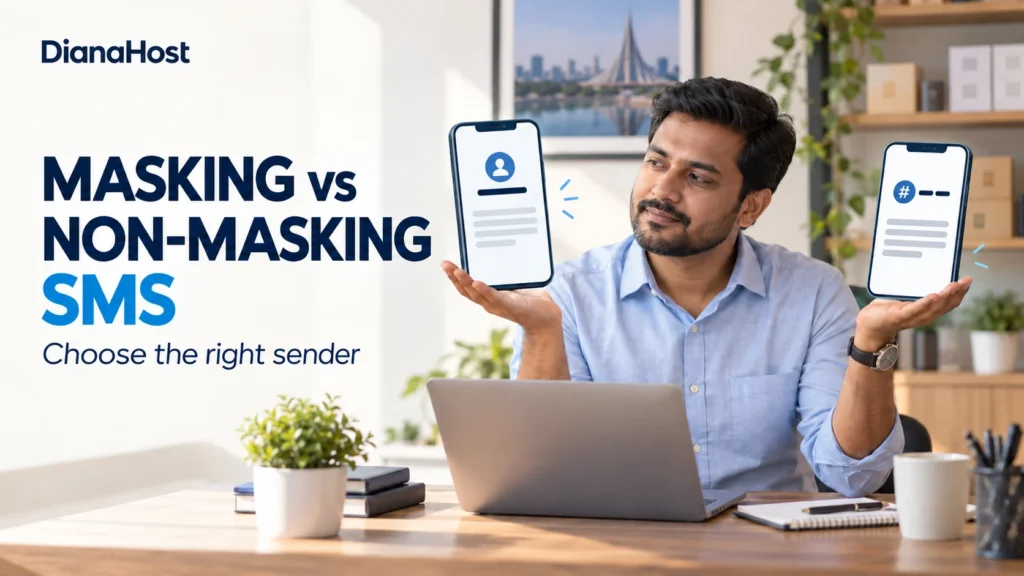

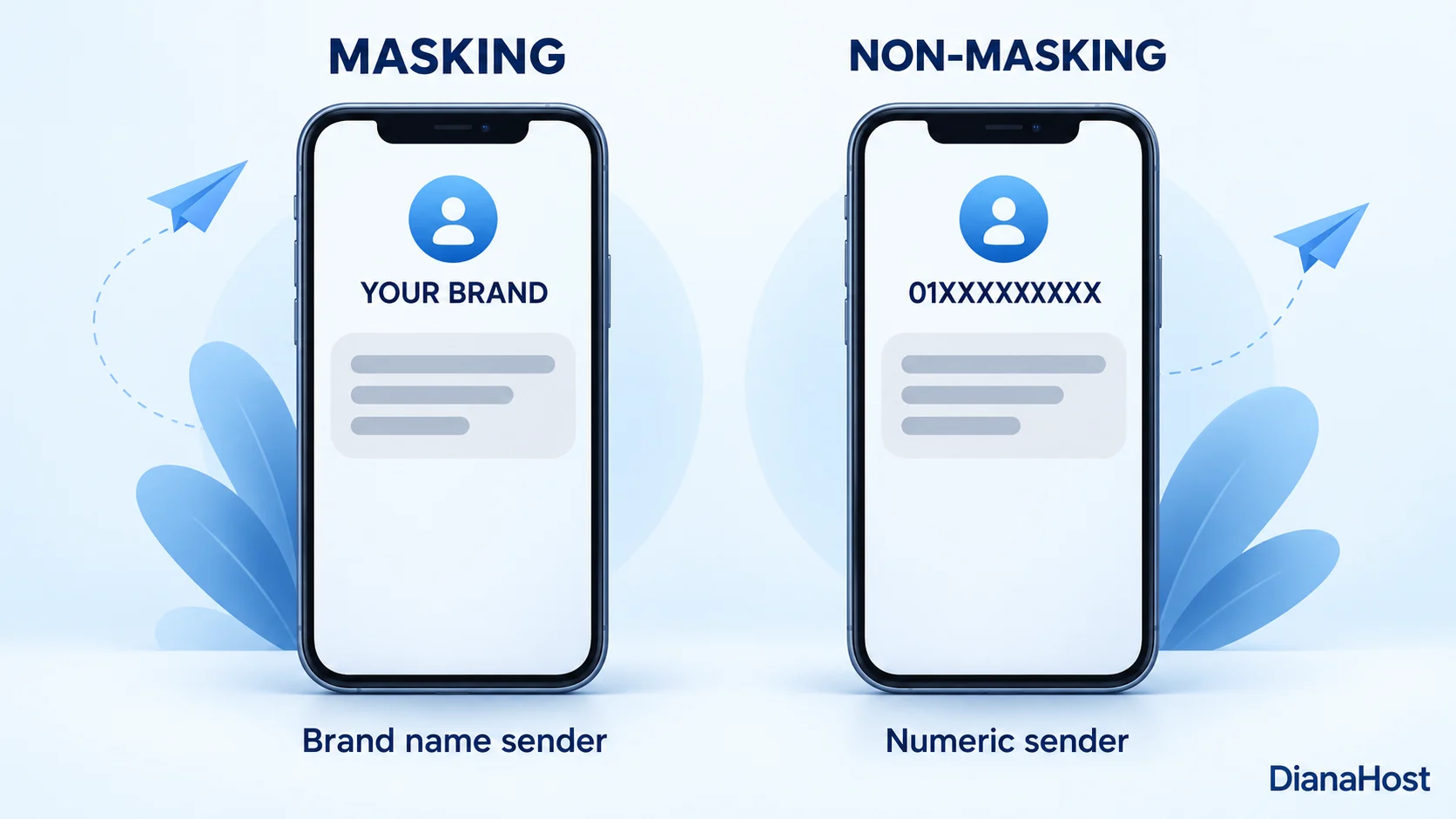
Masking SMS displays an approved brand name as the sender; non-masking SMS displays a numeric sender. Choose masking when recognition matters, and compare non-masking when budget or operational needs favour it. Neither label guarantees delivery, two-way replies or security. Check the actual route, approval requirements and total segment cost before choosing.
Imagine sending an order update to a first-time customer and a stock reminder to your own staff. The customer benefits from recognizing the business immediately. Your staff may already understand a clearly identified numeric sender. The right choice depends on the message and the recipient, not just the lowest advertised rate.
Masking vs non-masking SMS: the practical differences
A masking sender might display NABOPATH, a fictional brand, above the message. Non-masking shows a number instead. These labels describe sender identity; they do not tell you whether the message is promotional, transactional or an OTP.
| Consideration | Masking SMS | Non-masking SMS |
|---|---|---|
| Sender displayed | Approved brand or organization name | Numeric sender assigned or supported by the service |
| Recognition | Can make the business easier to identify | Include the business name clearly in the message |
| Activation | Sender-name registration and route approval may be required | Account verification and route activation may still be required |
| Replies | Alphanumeric senders are generally one-way | Two-way messaging must be confirmed; a number alone proves nothing |
| Price | Compare the applicable package and any setup costs | Often a lower-cost option; check equivalent service terms |
| Coverage | Depends on approved sender and activated operator routes | Depends on the service and activated operator routes |
Alphanumeric sender IDs commonly support up to 11 characters. Accepted characters and registration requirements vary by destination and provider; do not assume every name is allowed. Twilio’s sender-ID documentation explains these limits and one-way behaviour. Confirm DianaHost’s rules for your proposed name.
Which sender fits your business?
Choose masking for recognizable customer communication
A branded sender can be useful for order updates, appointment reminders, account alerts and relevant promotions to customers who expect them. It may reduce uncertainty about who is contacting them, especially when the message arrives without an existing conversation.
Recognition is not authentication. A familiar-looking sender does not make a message phishing-proof, guarantee a higher open rate or establish that a payment request is legitimate. For OTPs, the application still needs expiry, attempt limits and single-use verification. Compare DianaHost’s OTP SMS service against your technical requirements.
Consider non-masking for cost-sensitive operational messages
Numeric senders can suit staff notices, delivery-team updates and high-volume reminders where recipients already understand the context. Start the text with your business name so an unfamiliar number does not leave people guessing.
Non-masking can also be useful for a small permitted test before committing to a larger campaign. However, do not assume you can send immediately while a branded sender is pending: the alternative account, content and route must also be authorized.
Use both when the workflows justify it
You might choose an approved branded route for customer updates and a numeric route for internal alerts. Confirm whether your account supports both, how sender selection works in the dashboard or API, and which balance and rate apply. Do not copy another gateway’s API field names or assume messages can switch routes automatically.
Plan sender approval and message rules separately
Request a short, recognizable version of your real business name. Avoid another company’s identity or vague labels such as “OFFER.” Prepare evidence of your right to use the name and ask for the current document checklist, fees and expected lead time.
DianaHost’s masking SMS page describes sender approval and supporting documents. Confirm the requirements for your organization and operator routes before announcing a launch date. Its non-masking service page also refers to verification and activation requirements; numeric sending is not an approval bypass.
DianaHost’s published checklist mentions a completed TOS form, identity document, photograph and company-letterhead authorization for operator approval. Confirm the latest requirements for your organization and submit documents through the provider’s official process. The checklist and activation time can differ by sender and route.
Sender identity and message purpose are different decisions. Confirm the permitted language, promotional sending hours, template or content approval, and transactional/OTP conditions for the selected route. Do not assume that masking permits unrestricted promotions or that every OTP route operates without restrictions.
Use permission-based promotional lists and a working opt-out. “Reply STOP” is unsuitable for a one-way sender. A numeric sender also needs verified reply handling before that instruction is useful. Provide a tested alternative where necessary and exclude opted-out contacts from later campaigns. Our SMS marketing guide covers campaign preparation.
Compare total cost, not just the advertised SMS rate
Ask for a quote covering your message category, sender, volume and target networks. Check minimum purchase, balance validity, sender fees, taxes, charging rules and any volume discount. DianaHost’s public service pages contain different package presentations, so confirm which current terms apply to your account.
Where billing is per segment, calculate recipients × segments per message × the applicable rate, then add other charges. For example, 2,000 recipients receiving two segments means 4,000 billable segments before retries or other traffic. A lower segment rate does not automatically mean a lower total bill.
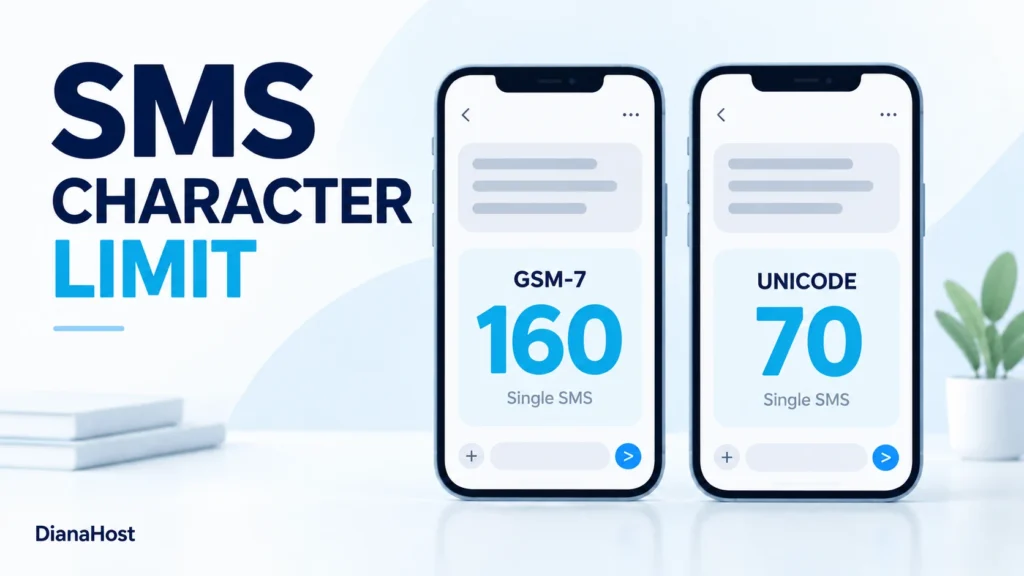
Sender type does not determine message capacity. Typical limits are 160 GSM-7 units for one segment, or 153 per multipart segment; Unicode messages, including Bangla, typically allow 70 or 67 respectively. Count the final copy, including brand text written inside the body, links and required instructions. The separate sender field does not consume message-body characters. See our Bangla SMS character-limit guide for examples.
Five checks before buying or sending
- Purpose: identify the audience, message category and action you expect.
- Sender: confirm the displayed name or number, registration status and any reply requirement.
- Route: verify current operator coverage, language, sending hours and content approvals.
- Budget: count final segments and obtain the applicable package terms in writing.
- Test: check sender display, Bangla rendering, delivery reports, links and opt-out handling on representative phones and networks.
A successful test is useful evidence for that test, not a guarantee that every future message will arrive.
Frequently asked questions
Can masking SMS reach every operator in Bangladesh?
Confirm which operator routes are active for your sender and package. Do not infer guaranteed delivery from a general “all operators” service description.
Can I have more than one masking sender ID?
Ask DianaHost about multiple brands or departments. Each proposed name may require separate ownership checks, approval and fees.
Is masking always better for OTP?
No. Recognition can help, but approved route suitability, delivery performance, cost and secure application-side verification also matter. Numeric OTP services can be appropriate.
Does non-masking mean customers can reply?
No. Confirm inbound SMS support, number ownership and the workflow that processes replies. A numeric sender may still be outbound-only.
Compare your options with DianaHost
Share your sample message, expected volume, audience, desired sender name and launch date. Ask DianaHost to confirm the right masking, non-masking or OTP service, current approvals and total cost. Choose the service that fits the workflow customers will actually use.