
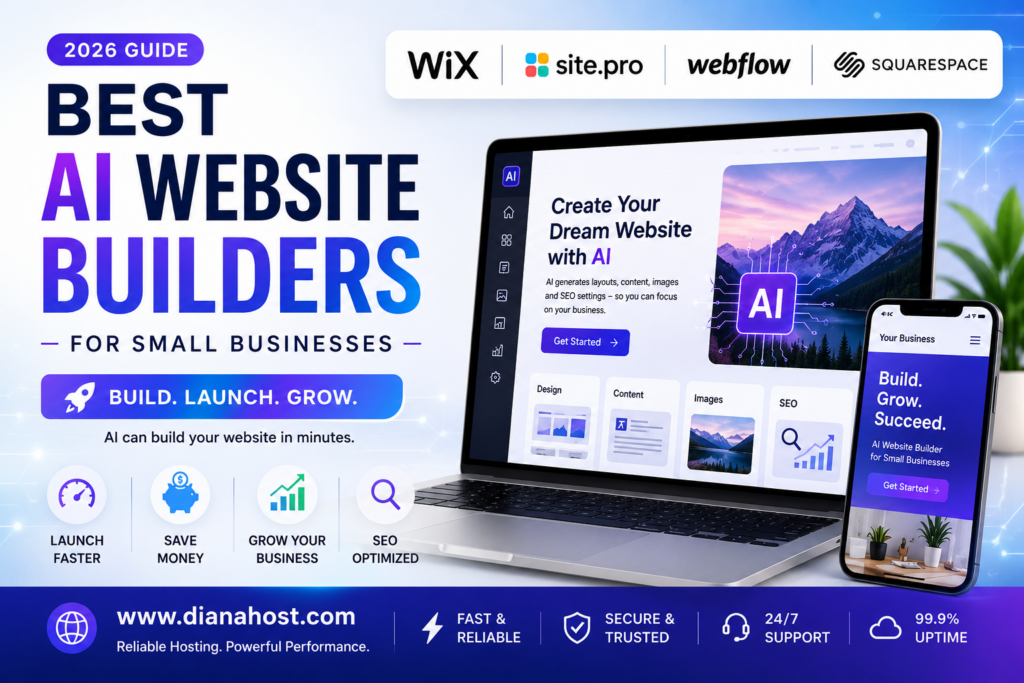

In 2026, artificial intelligence not only generates cat pictures and writes copy but also creates fully functional websites. If earlier an entrepreneur with a limited budget had to hire a web designer or spend weeks learning how platforms work, now it’s possible to get a working website in less than an hour.
Modern AI site builders can automatically create page structure, texts, images, and basic SEO optimization. This changes the landscape for small businesses that often don’t have time for complex websites and professional web design.
What is an AI Website Builder?
An AI website builder is a platform that uses machine-learning algorithms to automate the key stages of web development.
Instead of manually assembling blocks, writing texts, selecting images, and optimizing the site, an entrepreneur can describe their business in a prompt, and the system will generate a complete result. This automation is helpful when there are no programming or design skills, or when there is no time or budget to hire specialists.
AI Website Builders
Wix
Wix is a big platform with multiple products incorporating AI. For instance, Wix Harmony uses generative design and natural-language prompts to create a site based on simple descriptions; it can generate layouts, text, images, and basic SEO settings directly in the editor.
Wix has always recently implemented an AI bot that can edit websites — not just generate them. It’s one of the few website builders that have an option for a conversational interface with all website building processes being available through chat. However, this feature is not yet added to Wix Studio.
Site.pro
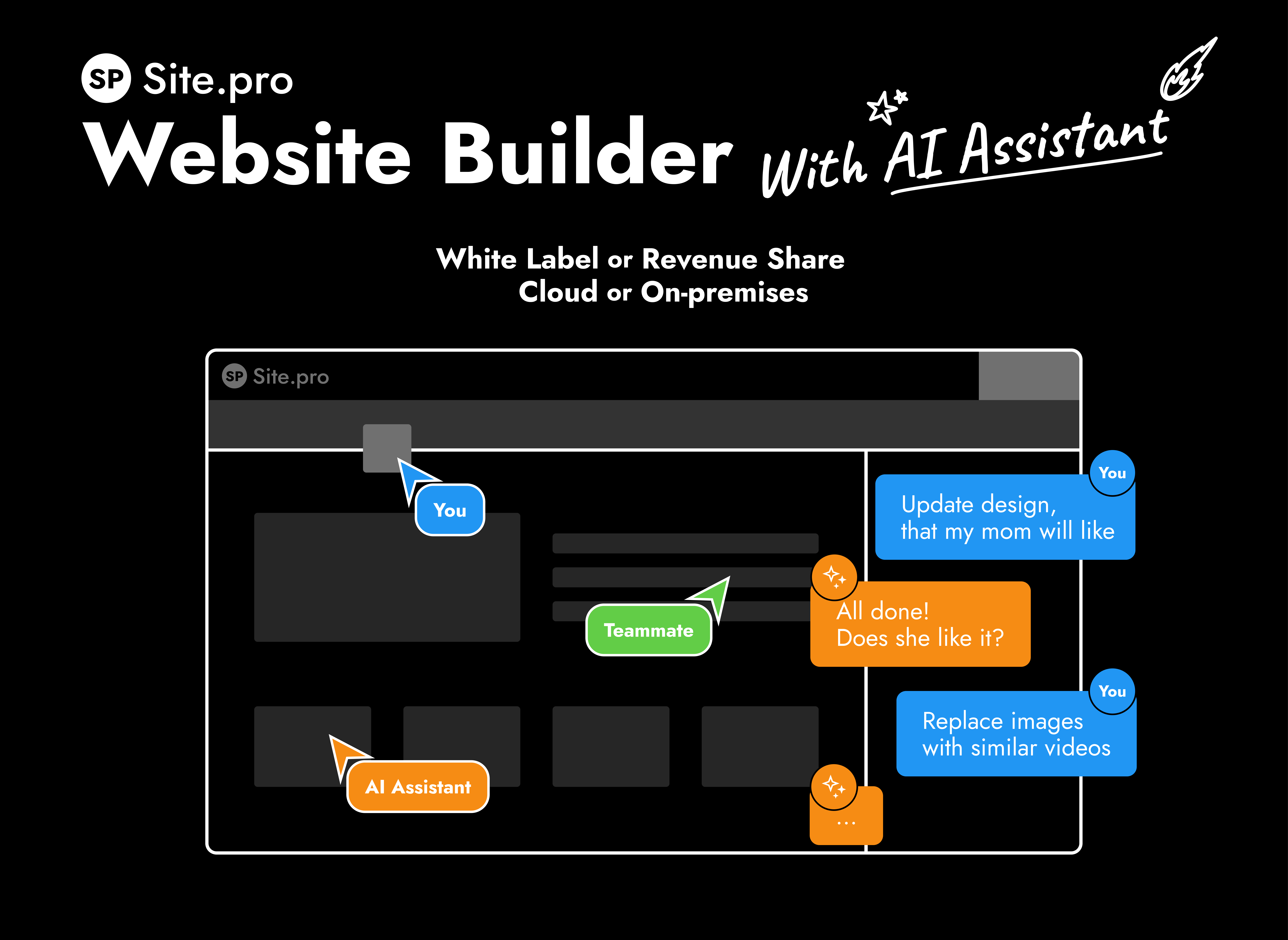
The AI assistant expands the classic Site.pro website builder. It is one of the first website builders that support conversational website management. All standard features and manual editing remain available, while the AI can create website design and also:
- Add new sections
- Generate texts
- Optimize SEO metadata
- Create or replace images
- Manage the site structure via voice or text commands
The presence of a full AI assistant gives users flexibility: they can fully rely on AI chatbot or manually fine-tune individual parts of the site. Multiple design versions can be generated quickly, allowing users to choose the best one and then add photos, contacts, prices, and more.
Webflow
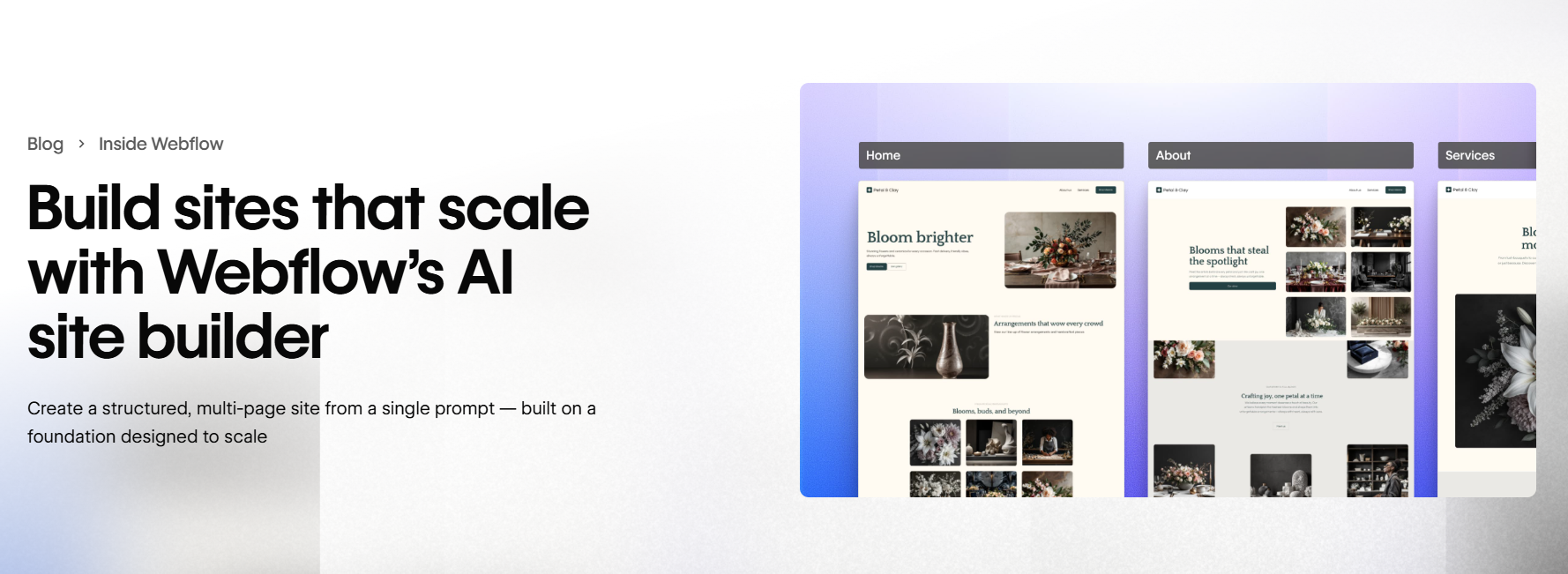
Webflow stands out for giving users designer-level control through a visual interface that outputs clean HTML, CSS, and JavaScript. It’s ideal for users who want:
- Custom layouts
- Responsive design control
- CMS-driven content without hand-coding
Webflow’s AI tools generate layout components, suggest copy, and accelerate design iterations. Combined with integrated hosting, a global CDN, and the ability to export code, Webflow supports workflows for freelance designers and agencies.
The downside is that Webflow’s power comes with a steeper learning curve than traditional drag-and-drop builders. Its AI assistance improves speed but doesn’t eliminate the need to understand core layout concepts, responsive logic, or Webflow’s own design hierarchy.
Advanced features—like complex CMS structures, multi-step interactions, or custom ecommerce logic—still require manual setup. Webflow is excellent for highly customized professional sites, but it may feel overwhelming for beginners seeking quick, fully automated website generation.
Squarespace
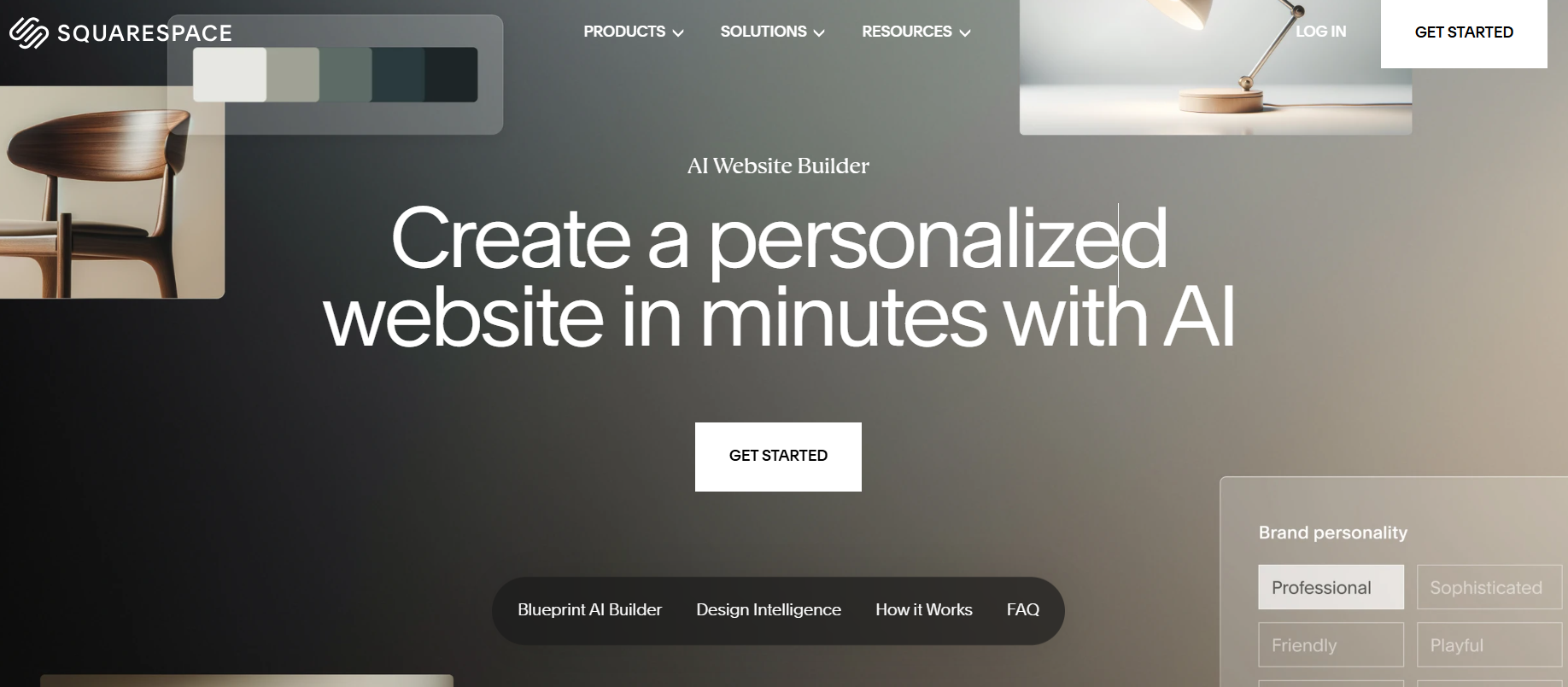
Squarespace’s Blueprint AI builds a personalized site draft based on your business type, goals, and preferred brand personality. It generates a tailored site structure, suggested pages, initial copy, color palettes and fonts. Once the draft is created, users can continue editing in Squarespace’s Fluid Engine.
Blueprint AI provides a starting point, but it isn’t a full one-click website generator. Its text and visuals are designed as placeholders. It also doesn’t provide AI support beyond the first iteration. Blueprint AI accelerates the initial setup but doesn’t replace the need for human input when creating a highly unique or complex website.
Comparison of AI Website Builders
| Platform | Website Generation | AI Texts | AI Images | AI SEO | AI-Assistant | Best For |
| Wix | Yes | Yes | Yes | Yes | Yes | Fast launches, landing pages, marketing |
| Squarespace | No | No | No | No | No | Simple service websites |
| Site.pro | Yes | Yes | Yes | Yes | Yes | Business sites, small & medium businesses |
| Webflow | Yes | Yes | Yes (generation & selection) | Yes | Limited, now in beta | Tech projects |
Advantages of AI Website Builders for Small Businesses
1. Fast Website Launch
AI tools can generate a working site in minutes, and even an inexperienced user will be able to launch in less than a day. It allows entrepreneurs to quickly get online and start attracting customers.
2. Budget Savings
AI builders are available via subscription, usually including hosting and site-management tools. Compared to hiring freelancers or agencies, this can be significantly more cost-effective.
3. Professional Results
AI helps create modern websites even for those with no design experience. Algorithms apply best practices in layout, typography, and color selection, enabling professional-looking web resources without coding.
4. Built-In Marketing Tools
Beyond structure and content creation, AI builders offer automatic SEO optimization and pre-designed landing-page templates. These help small businesses not only appear online but also attract traffic from search engines and AI agents.
Important Limitations to Consider
Limited Design Uniqueness
Since AI often relies on similar templates and algorithms, different businesses may end up with visually similar sites—an issue for brands that need a unique style.
Challenges With Scaling
AI builders work well for simple or startup-level websites, but may lack the capabilities needed for complex features, CRM integrations, or large-scale e-commerce. In such cases, custom development may still be required.
Generated Content Requires Review
AI doesn’t always understand the nuances of a specific niche or brand. Results may sometimes look generic or require manual editing to achieve the best outcome.
Conclusion
For small businesses, AI website builders offer a fast and affordable way to create a functional website with modern design and basic SEO. They are especially useful for startups, solo entrepreneurs, small shops, and service providers.
For complex functionality, or deep SEO strategy, professional involvement may still be necessary. Ultimately, an AI builder can serve as a powerful starting point, with the site evolving over time as the business grows.